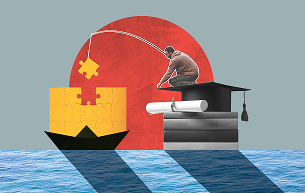

This page is about the Results-Driven Executor: the leader who turns ambitious goals into delivered outcomes through disciplined execution, goal orientation, and reliable performance. See all 20 personas →
About SynapseScope's framework
SynapseScope's leadership personas are proprietary behavioral archetypes, grounded in behavioral psychology and validated against assessment data from thousands of leaders. The framework identifies 20 distinct archetypes. Each one names the pattern that emerges when behavioral tendencies across eight dimensions combine into a recognizable leadership signature.
When Steve Jobs introduced the iPhone in 2007, the world saw visionary genius. Behind that launch was someone else: the person who figured out how to manufacture millions of units with zero precedent, built supply chains across continents, and turned 'insanely great' ideas into products you could actually buy in stores. That person was Tim Cook[3].
Jobs imagined the product. Cook figured out how to ship it at scale, hitting promised availability dates and production volumes that the supply chain he had built was ready to support. While other tech companies struggled with shortages and delayed launches, Apple typically shipped close to the launch dates it had committed to.
That is the difference a Results-Driven Executor makes: building the infrastructure so the launch date holds, the volume target lands, the commitment closes.
These are Results-Driven Executors: leaders who transform ambitious goals into measurable outcomes through relentless focus and structured discipline. Based on SynapseScope's leadership database (December 2025)[6], Results-Driven Executors represent approximately 7-9% of assessed leaders. When paired with stable strategic direction, their presence correlates with delivery reliability; without that direction, the same execution discipline can lock organizations into delivering the wrong thing well.
The question is whether you have someone who turns ambitious goals into delivered results, and whether that person is you.
The Psychological Profile of a Results-Driven Executor
Results-Driven Executors often feel an internal pressure that others don't quite understand. If you're one, you have probably sat through long strategic discussions waiting for someone to ask, "But how will we actually execute this?"
You see the gap between aspiration and action plan, and you build the bridge.
Four traits cluster in this profile:
- Execution focus: task-oriented precision and systematic completion.
- Goal orientation: a results-driven mindset organized around target achievement.
- Process discipline: structured workflows that turn one-off success into operational consistency.
- Reliability under load: dependable performance whether or not anyone is watching.
The difference between a Results-Driven Executor and a pure Operational Executor is the goal orientation: the Operational Executor optimizes the process for efficiency, while the Results-Driven Executor optimizes the process for the result it was meant to produce. The drive is not perfectionism. It is a refusal to leave the gap between commitment and completion to chance.
In strategy sessions you tend to run two tracks at once. While the room explores possibilities, you are already mapping critical-path dependencies, resource requirements, and the obstacles likely to surface in week three. That habit of turning ideas into shippable plans means you sometimes commit the team to milestones before the strategy is settled enough to support them.
We do not have direct neural data on Results-Driven Executors as a profile. The disciplined-execution pattern resembles what cognitive neuroscience describes as goal-directed control, mediated by the dorsolateral prefrontal cortex[1], and procedural mastery rooted in the basal ganglia[2]. That is an analogy with the literature, not a finding about the profile itself. What the analogy captures is the orientation: where others see an inspiring vision, you see the execution challenge it implies, and you calculate the probability of delivery before you calculate the upside.
Why Every Leadership Team Needs This Perspective
Imagine building a house with only architects and no construction managers. You would have beautiful blueprints, inspiring renderings, innovative designs, and no actual house. Most organizations operate closer to this than they would admit: brilliant at strategy, weak on execution discipline.
Results-Driven Executors provide the capacity that closes that gap: turning ambitious goals into delivered results through disciplined, systematic execution.
The Unique Value You Bring
Goals become roadmaps
When Amazon commits to launching a new service, the people who turn the announcement into a delivered product treat it with operational rigor: tracked metrics, named milestone owners, and explicit dependencies. Vision is the easy part. Execution is what closes the loop.
Implementation runs in parallel with strategy
While the room is still debating whether to build the new product, you are already identifying the manufacturing constraints, supply chain requirements, and quality control processes needed to actually ship it. The "what if" question and the "how exactly" question move forward together rather than in sequence.
Reliable delivery becomes organizational capability
You do not just achieve goals occasionally. You build the systems, processes, and disciplines that make on-time, on-budget delivery a property of the organization rather than the heroics of any one project leader.
Situations Where Results-Driven Executors Become Indispensable
1. High-Stakes Project Delivery
When the organization commits to critical deliverables, whether product launches, major implementations, or contractual obligations, the Results-Driven Executor becomes the backbone of the work. The job is not task management; it is orchestrating complex execution under precision constraints, where the date is the date and the spec is the spec.
Real impact: At SpaceX, operational leadership has translated Elon Musk's vision into a launch cadence that NASA can plan around[4]. Every launch is a long stack of precisely executed tasks where the cost of one missed dependency is the entire flight.
2. Scaling Operations Under Growth Pressure
Organizations experiencing rapid growth need the Results-Driven Executor to build the operational infrastructure that prevents chaos. The structured processes and reliable systems put in place during scale-up are what allow the organization to grow without breaking.
Consider this: As Airbnb scaled from thousands to millions of listings[5], the operational backbone, the quality control processes, the verification systems, the payouts and trust-and-safety workflows, was what allowed service consistency to hold during explosive growth. Growth without execution discipline becomes operational disaster.
3. Turnaround and Performance Recovery
When an organization is underperforming and commitments are not being met, the Results-Driven Executor diagnoses execution gaps and restores delivery discipline. The work is identifying where processes break down and rebuilding the infrastructure that produces consistent performance.
Real impact: As Microsoft's cloud business expanded into a major enterprise platform, operational leaders translated aspirational targets into executed reality: building data centers, optimizing performance, and delivering the reliability that enterprise customers could depend on.
4. Mission-Critical Operations
In healthcare, financial services, aerospace, and other sectors where execution failure has serious consequences, the Results-Driven Executor ensures that commitments are met with unwavering reliability. Precision and consistency become a competitive advantage rather than table stakes.
UPS's commitment to deliver packages on time, every time, has been institutionalized through programs like ORION, the route-optimization system that has produced significant reported operational savings and helped turn "brown trucks" into one of the world's most reliable delivery systems.
When This Persona Goes Wrong
The hard truth is that your greatest strength, overexpressed, becomes your greatest weakness.
Without balance from other personas, the Results-Driven Executor can deliver flawlessly on goals that no longer matter. Execution focus becomes tunnel vision: you optimize for delivery while missing market changes, customer shifts, or strategic pivots that require different execution entirely. Without input from Visionary Innovators who see new possibilities, Strategic Architects who design better roadmaps, and People-Centric Leaders who understand the human dynamics of execution, you become the person who delivers results that are technically perfect but strategically misaligned.
If your reaction is "but the execution IS what matters," that reaction is itself the warning sign.
Creating Collaboration, Not Clash
Knowing how this profile works alongside others reduces predictable friction in four pairings:
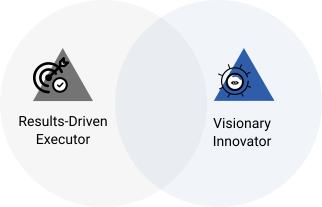
Results-Driven Executor + Visionary Innovator pairs ambitious vision with disciplined execution, grounding imagination in delivery capability.
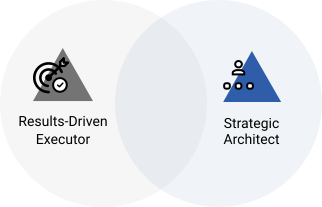
Results-Driven Executor + Strategic Architect translates strategic roadmaps into executed reality, combining long-range planning with disciplined delivery.
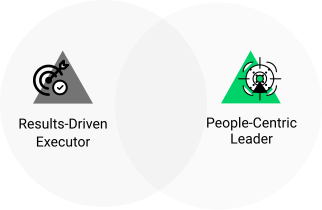
Results-Driven Executor + People-Centric Leader balances high-performance execution with team sustainability, so the results arrive without the team burning out behind them.
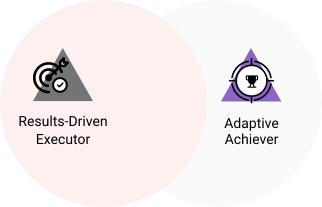
Results-Driven Executor + Adaptive Leader combines disciplined execution with contextual flexibility, building structure that responds to changing conditions.
When teams understand each persona's value, differences become complementary. Your execution discipline is what turns bold visions into delivered outcomes.
In closing
The Results-Driven Executor isn't a leadership style to celebrate or correct. It's one of 20 patterns SynapseScope models. The fit between the pattern and the role — and the operators around the leader — determines whether the value compounds or the team burns out. Read about all 20 personas →
References & Sources
Research Foundations
- Miller, E. K., & Cohen, J. D. (2001). An integrative theory of prefrontal cortex function. Annual Review of Neuroscience, 24, 167-202. Cited for: Research on prefrontal cortex in goal-directed behavior, planning, and executive control.
- Graybiel, A. M. (2008). Habits, rituals, and the evaluative brain. Annual Review of Neuroscience, 31, 359-387. Cited for: Research on basal ganglia's role in procedural learning and systematic task execution.
Case Examples Referenced
- Tim Cook biographical entry, Wikipedia. Available at https://en.wikipedia.org/wiki/Tim_Cook. Cited for: Tim Cook's promotion to lead Apple's worldwide operations in January 2007 and his role building the supply chain that supported the iPhone launch.
- Berger, E. (2021). Liftoff: Elon Musk and the Desperate Early Days That Launched SpaceX. William Morrow. Supplemented by SpaceX entry, Wikipedia, available at https://en.wikipedia.org/wiki/SpaceX. Cited for: SpaceX's NASA Commercial Resupply Services and Commercial Crew launch cadence and operational reliability.
- Stone, B. (2017). The Upstarts: How Uber, Airbnb, and the Killer Companies of the New Silicon Valley Are Changing the World. Little, Brown and Company. Supplemented by Airbnb entry, Britannica, available at https://www.britannica.com/topic/Airbnb. Cited for: Airbnb's scale-up from thousands to millions of listings and the operational systems that supported that growth.
- † SynapseScope Leadership Database (December 2025). Proprietary assessment data. For methodology, see the science behind the assessment.
Assessment Methodology
SynapseScope Leadership Assessment measures behavioral patterns across 8 dimensions using validated psychometric principles. Prevalence statistics derived from proprietary leadership database (December 2025). For technical documentation on the Spectrum Foundation framework, see the science behind the assessment.
Discover Your Leadership Persona
Every organization needs all 20 leadership personas to thrive. Results-Driven Executors are one essential piece, incomplete without the others.
Where do you fit in your organization's leadership ecosystem?