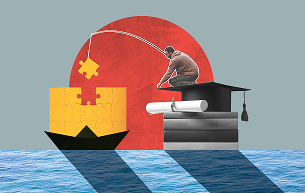

This page is about the People-Centric Catalyst: the leader who treats human capability as the primary input to organizational performance and develops it before deploying it. See all 20 personas →
About SynapseScope's framework
SynapseScope's leadership personas are proprietary behavioral archetypes, grounded in behavioral psychology and validated against assessment data from thousands of leaders. The framework identifies 20 distinct archetypes. Each one names the pattern that emerges when behavioral tendencies across eight dimensions combine into a recognizable leadership signature.
Between 2002 and 2016, Wells Fargo employees opened 3.5 million unauthorized accounts. The company eventually paid $3 billion in fines and settlements[1].
The strategy was clear: cross-sell more products to existing customers. The metrics were precise: eight products per customer. The execution was disciplined: daily sales targets, performance tracking, consequences for missing goals.
What nobody asked was how those targets were affecting actual human beings. Frontline employees were terrified. Managers created a culture of fear and intimidation. People opened fake accounts because they were more afraid of their managers than of breaking the law.
Strategy was intact. Execution was disciplined. What collapsed was the assumption that disciplined people would absorb impossible targets without breaking.
Call them People-Centric Catalysts. They invest in capability before they deploy it. When organizations lack them, employee capability becomes a constraint that undermines even brilliant strategy.
The question is: Do you have someone cultivating your organization's human foundation? Are you that person?
The Psychological Profile of a People-Centric Catalyst
The persona shows up most clearly in budget meetings. The People-Centric Catalyst is the one asking who is going to do the work after the cuts, not whether the cuts close the gap. You see disengagement before others do. You also overweight it: a high-engagement team can still be the wrong team for the work.
The persona combines three behaviors: a strong pull toward people over systems, a developmental rather than evaluative read of performance, and contextual flexibility in how support is delivered.
You treat human development as the primary driver of organizational performance, not as a moral preference. Trust, psychological safety[6], capability development, and authentic relationships are the conditions you build before extracting performance.
While others debate strategy and systems, you watch the room. You notice who is struggling, who is ready, where trust is thin.
What separates a People-Centric Catalyst from a people-pleasing harmonizer is the growth orientation: a harmonizer keeps people comfortable, while a Catalyst pushes them to develop.
Engagement research links employee engagement to lower turnover and higher performance[4]. Cameron and Quinn's culture work points in the same direction[5]. The research establishes the underlying engagement-and-culture mechanisms; the persona is a SynapseScope construct built on top of them.
The persona's failure mode is moral certainty. The People-Centric Catalyst who is sure that the room does not value people often stops listening to the room, which is the same disengagement they object to.
Why Every Leadership Team Needs This Perspective
Most organizations don't collapse from poor strategy. They erode from human attrition: lost talent, lost institutional knowledge, lost trust. Boris Groysberg's portability research found that star analysts who switched firms lost roughly 20% of their performance for at least five years, most of it traceable to lost team and relationship capital[7].
When paired with a Results-Driven Executor or Strategic Architect, the People-Centric Catalyst converts engagement into delivered capability. Alone, the persona produces high-trust teams that miss numbers. The contribution is the capacity to grow people faster than the organization loses them.
The Unique Value You Bring
Where others audit headcount, you audit capability.
When Satya Nadella became Microsoft's CEO in 2014, he didn't just change strategy. He shifted the cultural priorities to growth mindset, empathy, and learning[2]. The change is widely credited with unlocking innovation and collaboration that competitive internal dynamics had previously constrained.
Coaching gets the call before restructuring does.
When the persona is unbalanced, the symptom is a team that posts high engagement-survey numbers while missing quarterly delivery. When it is balanced, an underperforming team gets read as developmental gaps, relationship breakdowns, and unclear growth paths before it gets read as a reorg target. Coaching, learning opportunities, and rebuilt trust often produce more durable performance change than restructuring does.
Trust gets built in conversations, not org charts.
Gallup's manager-effect data attributes roughly 70% of variance in team engagement to the direct manager[8]. The "people leave managers" shorthand simplifies that finding, but the mechanism is real: authentic relationships, psychological safety, and developmental support are what hold capable people in place when other employers come calling.
Situations Where People-Centric Catalyst Become Indispensable
1. Cultural Transformation and Change Management
When organizations shift from command-and-control to empowerment, People-Centric Catalysts drive the change. Communicating new values is the easy part; the persona's contribution is modeling them, building trust around them, and creating the environments where they become lived experience.
Real impact: When Adobe eliminated stack rankings and annual reviews in 2012 in favour of continuous feedback and growth conversations[3], the transformation reflects people-centric leadership in action: building trust in the new approach, coaching managers on developmental conversations, and creating the psychological safety needed for honest feedback.
2. Talent Development and Succession Planning
Organizations need People-Centric Catalysts to build leadership pipelines and develop future capability. The contribution goes past spotting high potentials: developmental experiences, coaching, mentorship, and the relationships that help talented people grow into leadership.
Consider this: When companies face leadership transitions, People-Centric Catalysts ensure continuity by having invested deeply in developing multiple people ready to step up. Rigid succession plans become a backup rather than the main mechanism. The output is capability depth across the bench.
When This Persona Goes Wrong
Here's the hard truth: your greatest strength, overexpressed, becomes your greatest weakness.
Without balance from other personas, particularly Results-Driven Executors, Directive Leaders, or Strategic Architects who maintain performance standards and strategic focus, People-Centric Catalysts can create supportive environments that lack accountability. You invest so deeply in people development that performance expectations become unclear. Your flexibility becomes inconsistency. Your empathy prevents necessary difficult conversations. The most caring move is sometimes the hard one: clear standards, honest feedback, and accountability instead of more support.
Perhaps most critically: if you can't integrate perspectives from leaders who balance people focus with results orientation, goal clarity, and strategic priorities, you become the person who creates wonderful team dynamics that don't deliver business outcomes, or who invests endlessly in developing people for roles that don't align with organizational strategy.
If you're reading this and thinking "but people ARE the priority, others just don't value relationships enough," that might be exactly the warning sign. The best People-Centric Catalysts know that caring about people means helping them succeed, which sometimes requires difficult feedback, clear expectations, and aligning development with business needs.
Creating Collaboration, Not Clash
Pairings show what the persona contributes when it sits next to a complementary one:
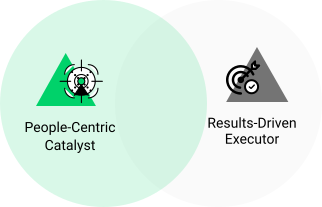
People-Centric Catalyst + Results-Driven Executor = High performance achieved sustainably. Results delivered through engaged, capable people.
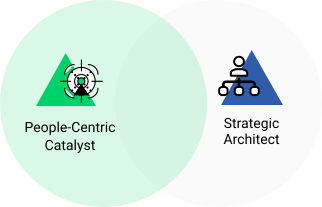
People-Centric Catalyst + Strategic Architect = Long-term vision with the people capability to execute it. Strategy supported by developed talent.
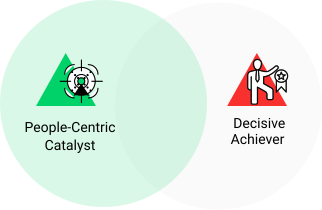
People-Centric Catalyst + Decisive Achiever = Empowerment balanced with clarity. People supported and held accountable.
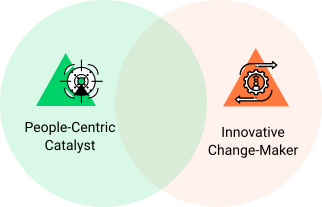
People-Centric Catalyst + Innovative Change-Maker = Human-centered innovation. Breakthroughs created through psychological safety.
When teams understand each persona's value, differences become complementary. Your people focus creates the human foundation that lets others drive strategy, deliver results, and achieve goals sustainably.
In closing
The People-Centric Catalyst isn't a leadership style to celebrate or correct. It's one of 20 patterns SynapseScope models. The fit between the pattern and the role — and the operators around the leader — determines whether the value compounds or the team burns out. Read about all 20 personas →
References & Sources
Research Foundations
- U.S. Department of Justice. (2020). "Wells Fargo Agrees to Pay $3 Billion to Resolve Criminal and Civil Investigations Into Sales Practices Involving the Opening of Millions of Accounts Without Customer Authorization." Press Release. Also documented in Glazer, E., & Rexrode, C. (2016). "Wells Fargo's Fake-Account Scandal." The Wall Street Journal. Cited for: Wells Fargo scandal where employees opened 3.5 million unauthorized accounts (2002-2016) resulting in $3 billion in fines and settlements, illustrating the catastrophic consequences when organizations ignore human limits and ethics in pursuit of aggressive sales targets without people-centric leadership.
- Nadella, S. (2017). Hit Refresh: The Quest to Rediscover Microsoft's Soul and Imagine a Better Future for Everyone. New York: Harper Business. Also documented in Harvard Business Review case studies on Microsoft's cultural transformation under Nadella. Cited for: Satya Nadella's cultural transformation at Microsoft starting in 2014, prioritizing growth mindset, empathy, and learning to unlock innovation and collaboration that had been stifled by competitive internal dynamics, exemplifying people-centric leadership driving organizational performance.
- Morris, D. (2016). "Why Adobe Abolished the Traditional Performance Review." Fortune. Also Groysberg, B., & Bell, E. (2013). "Adobe's Bid for Talent." Harvard Business School Case Study 9-413-105. Cited for: Adobe's 2012 elimination of stack rankings and annual reviews in favor of continuous feedback and growth conversations, demonstrating people-centric leadership through building trust, coaching managers on developmental conversations, and creating psychological safety for honest feedback.
- Harter, J. K., Schmidt, F. L., & Hayes, T. L. (2002). Business-unit-level relationship between employee satisfaction, employee engagement, and business outcomes: A meta-analysis. Journal of Applied Psychology, 87(2), 268-279. Cited for: Psychological research demonstrating that people-centric leadership focused on employee engagement, development, and supportive environments creates measurable business impact including higher performance, lower turnover, and stronger organizational resilience.
- Cameron, K. S., & Quinn, R. E. (2011). Diagnosing and Changing Organizational Culture: Based on the Competing Values Framework. San Francisco: Jossey-Bass. Cited for: Organizational psychology research showing that cultures prioritizing human investment, relationship quality, and people development drive sustainable competitive advantage through higher innovation, engagement, and organizational effectiveness.
- Edmondson, A. C. (1999). Psychological safety and learning behavior in work teams. Administrative Science Quarterly, 44(2), 350-383. Also Edmondson, A. C. (2018). The Fearless Organization: Creating Psychological Safety in the Workplace for Learning, Innovation, and Growth. Hoboken: Wiley. Cited for: Research on psychological safety demonstrating that people-centric leadership creating trust, supportive environments, and authentic relationships enables team learning, innovation, and performance that process-focused approaches alone cannot achieve.
- Groysberg, B. (2010). Chasing Stars: The Myth of Talent and the Portability of Performance. Princeton: Princeton University Press. Also Groysberg, B., Nanda, A., & Nohria, N. (2004). The risky business of hiring stars. Harvard Business Review, 82(5), 92-100. Cited for: Portability research showing star analysts who switched firms lost roughly 20% of their performance for at least five years, with the loss attributable to team and relationship capital that does not travel with the individual.
- Gallup. (2015). State of the American Manager: Analytics and Advice for Leaders. Washington, DC: Gallup, Inc. Cited for: Gallup's finding that managers account for roughly 70% of the variance in team engagement, supporting the "people leave managers" mechanism through which authentic relationships and developmental support retain capable employees.
Case Examples Referenced
- Wells Fargo Sales Practices Scandal (2002-2016) - Used to illustrate the catastrophic failure of organizations lacking people-centric leadership, where aggressive targets without consideration of human ethics and limits led to 3.5 million unauthorized accounts, $3 billion in fines, and a culture of fear that pushed employees to illegal behavior.
- Microsoft/Satya Nadella (2014-present) - Exemplifies people-centric cultural transformation where prioritizing growth mindset, empathy, and learning unlocked innovation and collaboration, demonstrating that people development directly drives organizational performance and competitive advantage.
- Adobe Performance Review Transformation (2012) - Demonstrates people-centric leadership through eliminating stack rankings and annual reviews in favor of continuous feedback, creating psychological safety, and building trust that enables honest developmental conversations and sustained performance improvement.
Assessment Methodology
SynapseScope Leadership Assessment identifies People-Centric Catalysts through behavioral patterns including intense people focus (empathetic, relationship-centered), high growth orientation (nurturing, empowering), and adaptive flexibility (responsive to individual needs). For technical documentation, see the science behind the assessment.
Discover Your Leadership Persona
Every organization needs all 20 leadership personas to thrive. People-Centric Catalysts are one piece. Essential, but incomplete on their own.
Where do you fit in your organization's leadership ecosystem?